
What is
Love Addiction?
Love addiction, defined.
Love addiction is a process addiction, meaning an addiction to a behavior or set of behaviors instead of a substance. It can feel like you’re addicted to a particular person, but it’s more about the process of trying to get something from them: the unconditional, unwavering love you needed as a child.
Why would we expect this? Because cultural messaging has conditioned us to believe that romantic relationships hold the key to our happiness. It reinforces the myth of unconditional love when in reality healthy adult love comes with boundaries.
What are the symptoms of love addiction?
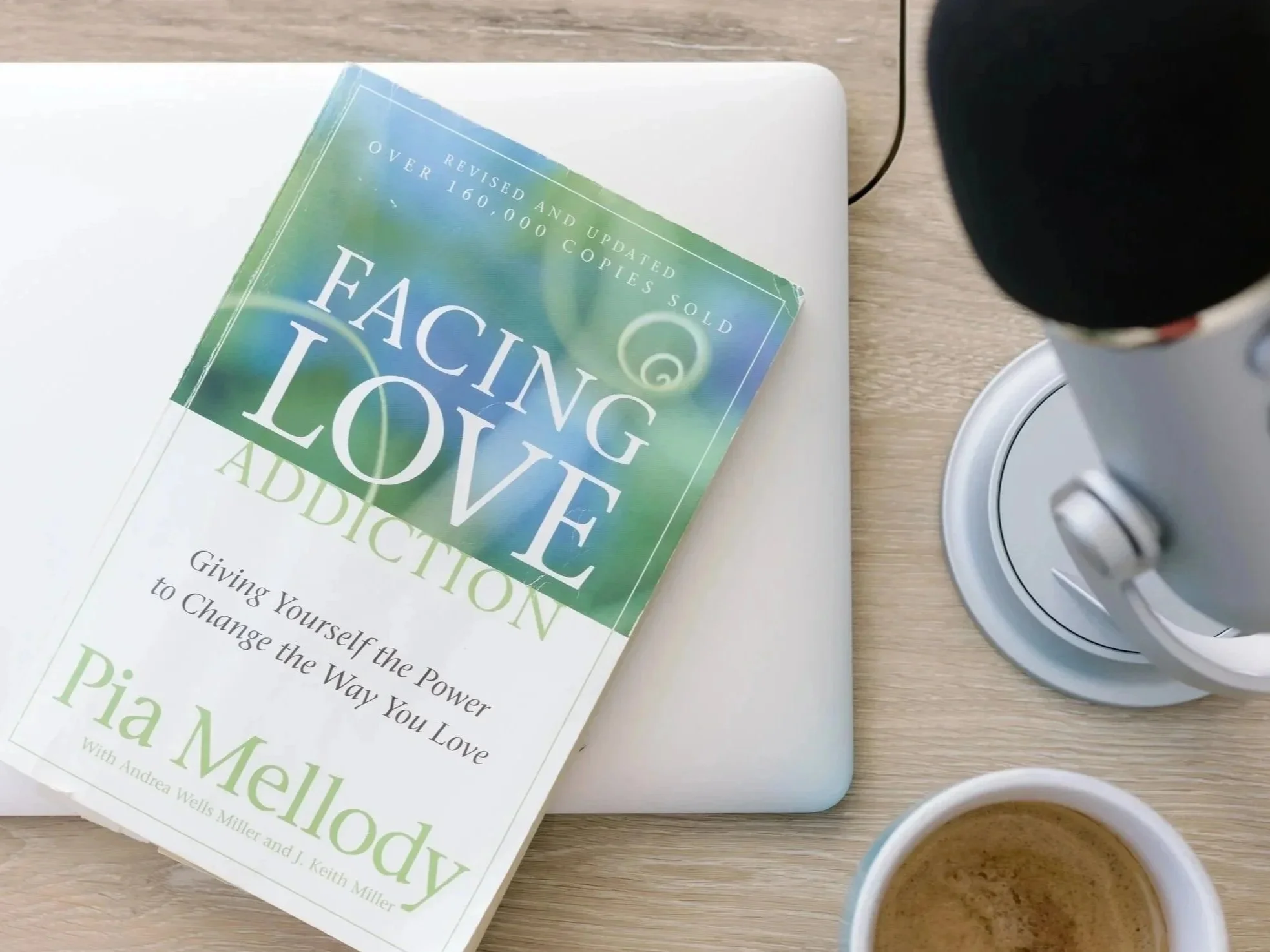
Even though love addiction isn’t a disorder or a diagnosis, Pia Mellody identified what she referred to as three symptoms of love addiction:
Expecting unconditional positive regard from a partner
Assigning too much value to another person
Neglecting yourself while in the relationship
For more about these symptoms, download my free assessment and workbook.
Why is it called love addiction?
Love addiction has little to do with healthy adult love, because that requires actually getting to know someone. In an addictive relationship, we’re seeking the love we needed as children but didn’t get consistently. Plus we’re often trying to get this from someone who isn’t fully available for a relationship. Relationships like this come with intensity, which gets confused with “chemistry,” and we fall for someone’s potential rather than the reality of them.
It’s referred to as an addiction because it comes with the characteristics of any addiction: We become emotionally dependent as our self-care declines and personal life suffers, but continue in the relationship despite the consequences. We try to change our behavior or end the relationship and can’t, or can’t stay away even if we do end it. We isolate and keep our behavior secret from people closest to us. Our health, work life and finances suffer because we’re so focused on the relationship. Love addiction is progressive, and if left unaddressed it can become life-threatening.
What causes love addiction?
For most of us it starts in childhood through familial and cultural messages. Developmental trauma, insecure attachment and early relational experiences lay the groundwork. So does a culture that teaches girls their value depends on being good in order to be chosen. Neurocomplexity, including ADHD and autism, can play a part too.
How do I recover from love addiction?
Recovery begins when you realize something has to change. Maybe you’ve just experienced a painful breakup that feels like so many others that came before it. You can see the pattern you’ve been repeating is hurting you. You don’t want to live like this anymore. The first step is to secure support, whether that’s a therapist, a coach or a 12-step group like SLAA, LAA or CoDA. Read books about love addiction and listen to podcasts. Talk to others who get it. Recovery is a process, but it all starts with awareness and a willingness to do something different.
Where do I start?
My Understanding Love Addiction series provides a collection of resources to help you get started in recovery. My podcast, Journals of a Love Addict, includes 75 episodes of recovery stories and conversations with authors, experts, and others who have struggled with love addiction. More resources, including links to 12-step meetings, can be found on my Resources page.